
Fall Furnace Filter Swap: Why It Matters More Than You Think for St. George Homeowners
St. George has a heating season that most of the country doesn’t think about when they picture Southern Utah. The same high desert that bakes Washington and Ivins at 105°F in July drops into the 30s overnight by November, and furnaces throughout the area kick on for real from October through March. When that switch happens, your furnace filter becomes the first line of defense between your equipment and the months of performance ahead.
Most St. George homeowners know they’re supposed to change their furnace filter. Far fewer actually do it on a schedule. And in a desert environment where red rock dust, pollen from the region’s scrublands, and construction dust from one of Utah’s fastest-growing cities all circulate year-round, a filter that should have been changed in September is silently costing you in energy bills, equipment wear, and air quality by November.
At Any Hour Electric, Plumbing, Heating & Air, we have been helping Utah homeowners keep their homes comfortable for over 60 years. We serve St. George, Washington, Ivins, Santa Clara, Hurricane, La Verkin, Cedar City, Enoch, Kanab, Toquerville, Leeds, Springdale, and communities across Washington and Iron Counties. Our licensed HVAC technicians will walk you through exactly why the fall filter swap matters, what filter is right for your home, and what else your system needs heading into Southern Utah’s heating season.
Why the Fall Filter Swap Is More Important in St. George Than in Most Places
- Southern Utah’s Desert Environment Creates Year-Round Filter Demands: St. George’s climate is beautiful, but it generates particulate load on your HVAC filter at a rate most homeowners underestimate. The red sandstone soil throughout Washington County is fine-grained and becomes airborne easily, particularly during the wind events that move through the St. George basin from the northwest. Red Cliffs and the surrounding mesa terrain funnel dust into the valley on a regular basis. Combine that with pollen from the region’s diverse desert vegetation, blowing grit from ongoing construction across the fastest-growing metro in Utah, and the general high-particulate environment of the Mojave transition zone, and a filter in a St. George home carries a heavier load than an equivalent filter in a less arid climate.
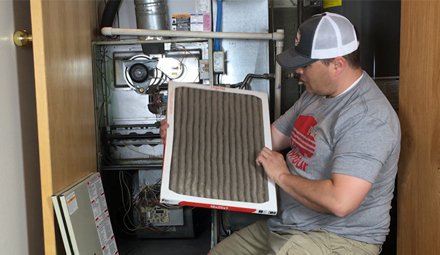
- Filters That Survived the AC Season Are Already Depleted: Your furnace and your air conditioner share the same air handler and the same filter slot. A filter installed in May and left in place through a Southern Utah summer that ran AC from April to October has been processing dusty desert air through six to seven months of continuous HVAC operation. By the time fall arrives and you switch from cooling to heating, that filter is already at or near the end of its effective capacity. Running a clogged filter into the heating season means your furnace starts the year behind, pushing heated air through a partially blocked medium that restricts airflow, reduces efficiency, and forces the blower motor to work harder than it should.
- St. George’s Dual-Season HVAC Demands Require a Proactive Filter Strategy: Unlike climates with a defined off-season where the HVAC system rests and the filter recovers, St. George homeowners transition almost directly from an intense cooling season to a meaningful heating season with very little gap in between. The system does not rest. That means the fall filter swap is not just a courtesy — it is the maintenance step that allows your furnace to start the heating season at full capacity rather than fighting through a filter that is carrying the residue of an entire cooling season.
- A Clogged Filter Will Drive Up Your Energy Bills Through Winter: The relationship between filter condition and energy consumption is direct and measurable. A partially clogged filter reduces airflow across the heat exchanger. When airflow is reduced, the furnace has to run longer to deliver the same amount of heat to the home. Longer run cycles mean higher gas or electric consumption. For a St. George homeowner running the furnace from October through March, a dirty filter installed at the start of the season translates to elevated utility bills every single month through winter. The cost of the filter is negligible compared to the savings it delivers when replaced on schedule.
- Indoor Air Quality in a Sealed St. George Home Depends on the Filter: When windows close in October and your home seals up for the heating season, the air circulating through your HVAC system is the primary mechanism for capturing and containing indoor particulates. A fresh filter at the start of the heating season means your system is actively catching dust, pollen, pet dander, and desert particulates during every heating cycle. A depleted filter lets those particles circulate freely through the home and accumulate on surfaces, in ductwork, and eventually on the components inside the air handler itself.
What a Clogged Filter Actually Does to Your Furnace
- Reduced Airflow Across the Heat Exchanger: The heat exchanger is the component that transfers heat from the burner to the air moving through your system. It requires adequate airflow to function safely and efficiently. When a clogged filter restricts that airflow, the heat exchanger runs hotter than it is designed to. Over time, thermal stress from running too hot causes micro-cracks to develop in the heat exchanger — and a cracked heat exchanger is a carbon monoxide risk that requires immediate repair or system replacement. A filter swap costs a few dollars. A heat exchanger repair costs significantly more.
- Blower Motor Strain: Your furnace’s blower motor moves air through the filter and distributes it throughout the ductwork. When the filter is clogged, the motor works harder to pull the same volume of air through a restricted medium. That additional load increases motor temperature, accelerates bearing wear, and shortens the service life of one of the most expensive components in your system. St. George homeowners who replace filters on schedule will see meaningfully longer blower motor life than those who don’t.
- Short Cycling: When airflow is severely restricted by a clogged filter, the furnace may reach its high-limit temperature before completing a full heating cycle and shut off prematurely. It then waits to cool slightly and fires again, only to reach the limit and shut off again in a pattern called short cycling. Short cycling is hard on the igniter, the control board, and the heat exchanger, and it means the furnace is never running long enough to evenly heat the home. If your home has rooms that are never quite comfortable during winter, a chronically neglected filter may be a contributing factor.
- Coil Freeze and Evaporator Damage: In a system that also provides cooling, a severely restricted filter can cause the evaporator coil to freeze during cooling cycles even in fall. Ice formation on the coil is damaging to the coil itself and to refrigerant lines, and it eliminates cooling capacity entirely until the ice melts. This issue is less common during the heating season but reflects the cumulative damage that a chronically ignored filter creates across both operating modes.
Why St. George and Washington County Homeowners Choose Any Hour Services
- Helping Utah Homeowners for Over 60 Years: No one has helped more Utah homeowners than Any Hour Services. We have been serving families across the state for over six decades and have built a reputation for honest service, expert work, and a genuine commitment to the communities we serve — including the rapidly growing communities of Washington County.
- Upfront Pricing — We Never Charge by the Hour: You will know exactly what the service costs before we begin. Our upfront pricing model means no surprises at the end of the visit, no hourly charges that climb unexpectedly, and no pressure to approve work you were not expecting. If the scope does not change, neither does the price.
- Flexible Scheduling Including Saturday Appointments: We stay open late and offer Saturday appointments so you can schedule service when it actually fits your life, not just during weekday business hours.
- Financing Options Available: If a fall tune-up reveals a furnace repair, a heat pump service, or a smart thermostat installation that fits your goals but needs to fit a budget, flexible financing options are available so the right service for your home does not have to wait.
- The VIP Membership Plan: For St. George homeowners who want year-round protection, priority scheduling, and annual maintenance visits that keep every system in top condition, our VIP Membership Plan delivers all of that and more. For heating and cooling specifically, the plan provides annual furnace and AC maintenance, priority service access during busy heating and cooling seasons, and discounts on any repairs that our technicians identify during a visit.
Start the Heating Season Right — Schedule Your Fall Filter Swap and Furnace Tune-Up Today
The fall filter swap is five minutes of maintenance that protects months of performance. Combined with a professional furnace tune-up from Any Hour Services, it is the complete preparation that gives St. George and Washington County homeowners real confidence that their heating system is ready for whatever Southern Utah’s fall and winter bring.
Call Any Hour Services today at (435) 534-7436 or book your fall furnace maintenance online at Any Hour Services- St George to schedule your filter swap, furnace tune-up, or smart thermostat installation before the first cold nights of October arrive across the St. George area.