When the Pentagon announced its FORTRESS America initiative in September 2026, a central priority was strengthening military infrastructure so essential operations could continue during disruptions to the electrical grid.
One part of the initiative focuses on independent electricity generation, reducing reliance on outside utilities.
Although FORTRESS America was developed for military installations, it raises an important question for homeowners in Phoenix and the surrounding Valley:
If electricity went out during extreme heat, how would you keep your home cool and your essential electrical systems operating?
In the Phoenix area, air conditioning is more than a convenience during the hottest months of the year.
Understanding how cooling equipment depends on electricity and which backup options are available can help homeowners prepare for unexpected outages.
What Is the Pentagon’s FORTRESS America Initiative?
Announced September 30, 2026, FORTRESS America is an initiative focused on strengthening military infrastructure, energy independence, and operational resilience.
Among its goals is enabling military installations to generate electricity independently of the commercial power grid.
The initiative also addresses infrastructure security and critical supply chains.
FORTRESS America is not a residential program, and the announcement does not suggest that a widespread power outage is imminent.
However, the broader principle of planning for essential electrical needs is relevant to homeowners, especially in places where extreme temperatures can make outages more serious.
Why Power Outages Deserve Special Attention in Phoenix
Metro Phoenix experiences prolonged periods of high temperatures during summer.
Air conditioning systems work to maintain indoor comfort, while refrigerators, freezers, and other electrical appliances operate throughout the day.
An outage can interrupt all of these systems.
Air Conditioning Stops Working
Central air conditioners and heat pumps depend on electricity.
When utility service fails, cooling equipment generally stops operating unless an appropriately designed backup power system is available.
Indoor temperatures may rise, especially during extreme heat and in homes with substantial sun exposure.
For older adults, young children, and people with certain medical conditions, excessive indoor heat can become dangerous.
Homeowners should have a plan for reaching a safe, air-conditioned location if indoor conditions become unsafe.
Refrigerators and Freezers Lose Cooling Capacity
An outage can also affect food storage.
Federal emergency preparedness guidance estimates that an unopened refrigerator generally keeps food cold for about four hours.
A full unopened freezer may maintain safe food temperatures for approximately 48 hours.
Actual temperatures and food safety depend on the appliance, how full it is, and whether the doors remain closed.
Communication and Medical Equipment May Be Affected
Home internet equipment, electrical outlets, charging devices, and certain medical equipment may stop operating.
Some households have additional electrical needs that should be considered when preparing for an outage.
Anyone who depends on powered medical equipment should coordinate an emergency backup plan with their healthcare provider and equipment supplier.
Can a Whole-Home Generator Keep Your Air Conditioner Running?
A properly sized standby generator may be able to operate a home’s central air conditioning system during a utility outage.
However, not every generator can support every AC system.
Air conditioning equipment can require substantial electrical power, including additional power during compressor startup.
A generator must be sized and configured to accommodate the connected equipment.
Several factors influence whether a generator can operate your AC.
Your Air Conditioner’s Electrical Requirements
Larger air conditioners generally require more electricity than smaller systems, although actual demand depends on equipment design and efficiency.
Homes with multiple cooling systems may need additional generator capacity or a load-management strategy.
Starting Power Requirements
Some air conditioning compressors require significantly more electricity when starting than during normal operation.
A professional load calculation can help determine whether a generator can handle these demands.
Other Connected Appliances
The generator may also need to operate refrigeration, lighting, communication equipment, and other electrical circuits.
Running multiple large appliances simultaneously can increase total demand.
An appropriately designed system accounts for these loads rather than looking at air conditioning alone.
Whole-Home Backup Power vs. Essential-Circuit Backup
Phoenix homeowners generally have two broad approaches when choosing backup power.
Essential-Circuit Backup
An essential-circuit backup system supplies electricity to selected household equipment.
Depending on its size, this might include refrigeration, essential lighting, internet equipment, and selected outlets.
Some systems may support a smaller cooling appliance, provided that its electrical demand falls within the system’s capacity.
However, a small generator should not be assumed capable of operating a central air conditioner.
Larger Standby Generator Systems
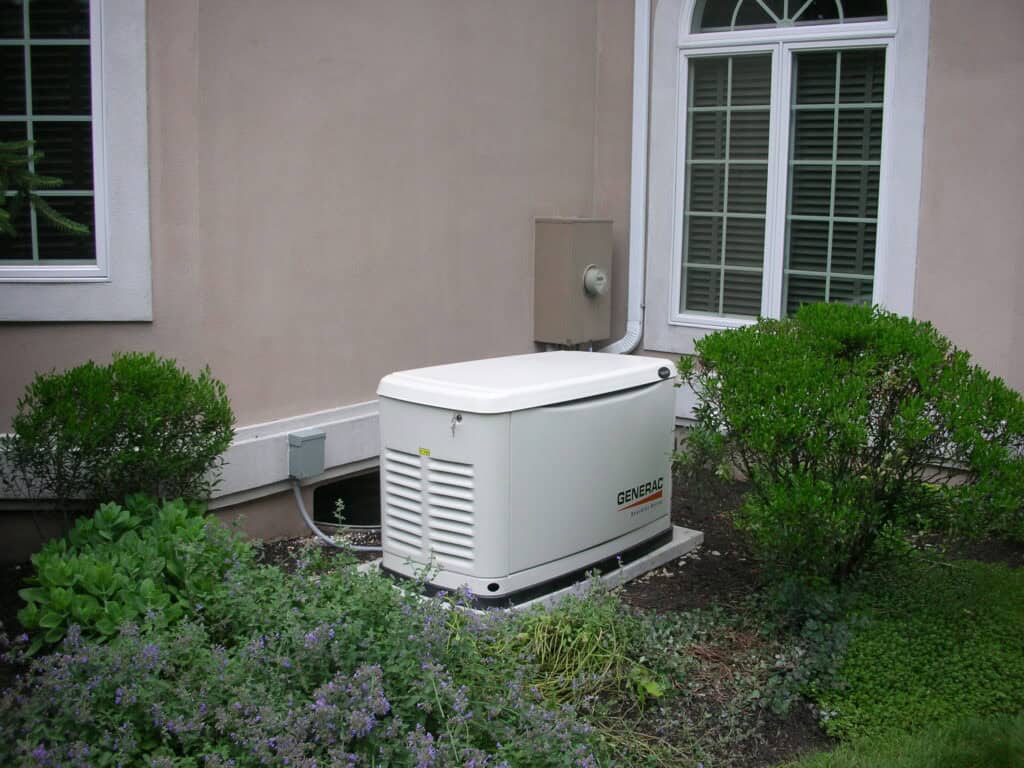
A larger standby generator may be configured to operate central air conditioning and additional household equipment.
These systems are permanently installed and typically use automatic transfer equipment.
They may offer greater convenience during outages, but they also require appropriate electrical connections, fuel availability, permits, and maintenance.
The right approach depends on the homeowner’s priorities and budget.
How to Prepare Your Phoenix Home for an Outage
1. Identify Essential Electrical Needs
Decide which appliances and systems would matter most during an outage.
For some households, maintaining air conditioning may be the highest priority.
Others may prioritize refrigeration, medical equipment, communications, or essential lighting.
2. Evaluate Your Electrical System
A licensed electrician can review electrical panel capacity, existing connections, and the requirements for a potential generator installation.
Not every home requires an electrical panel upgrade.
An evaluation helps determine which changes, if any, are appropriate.
3. Compare Backup Generator Options
Portable generators, standby generators, and battery-based systems provide different levels of backup power.
Homeowners should compare their capacities, operating limitations, fuel requirements, and total costs.
Portable fuel-burning generators must operate outdoors and be connected safely.
4. Plan for Extreme Heat Without Electricity
Even homeowners with backup power should have an emergency plan in case their system fails or cannot operate long enough.
During an outage:
- Keep blinds and curtains closed to reduce solar heat gain.
- Avoid unnecessary indoor heat-producing activities.
- Monitor indoor temperatures.
- Keep drinking water available.
- Follow local heat advisories and utility updates.
- Relocate to an appropriate cooling center or another safe location if indoor temperatures become dangerous.
Do not assume that a backup generator eliminates every heat-related risk.
5. Maintain Your Equipment
Heating and cooling equipment should receive appropriate maintenance.
Homeowners with generators should follow the manufacturer’s service and testing requirements.
Routine maintenance helps identify equipment problems, but it does not guarantee uninterrupted operation.
Does Every Phoenix Home Need a Whole-Home Generator?
Not necessarily.
Some homeowners may find that limited backup power and a well-developed emergency plan meet their needs.
Others may prioritize a standby generator capable of supporting central air conditioning and other household systems.
Generator sizing should reflect actual electrical demand, household priorities, and available resources.
A professional evaluation can help homeowners understand the options without purchasing unnecessary capacity.
Explore Backup Power With Any Hour Services Arizona
The Pentagon’s FORTRESS America initiative highlights the importance of identifying essential systems and preparing for interruptions.
For Phoenix-area homeowners, air conditioning and reliable electricity may be particularly important during extreme heat.
Any Hour Services provides electrical, heating, cooling, and plumbing services throughout Phoenix, Mesa, Scottsdale, Chandler, Glendale, and surrounding Valley communities.
Our electrical professionals can help evaluate your home’s power needs and explain generator installation options.
Contact Any Hour Services Arizona to discuss home generator installation and backup power options that fit your home’s cooling and electrical needs.